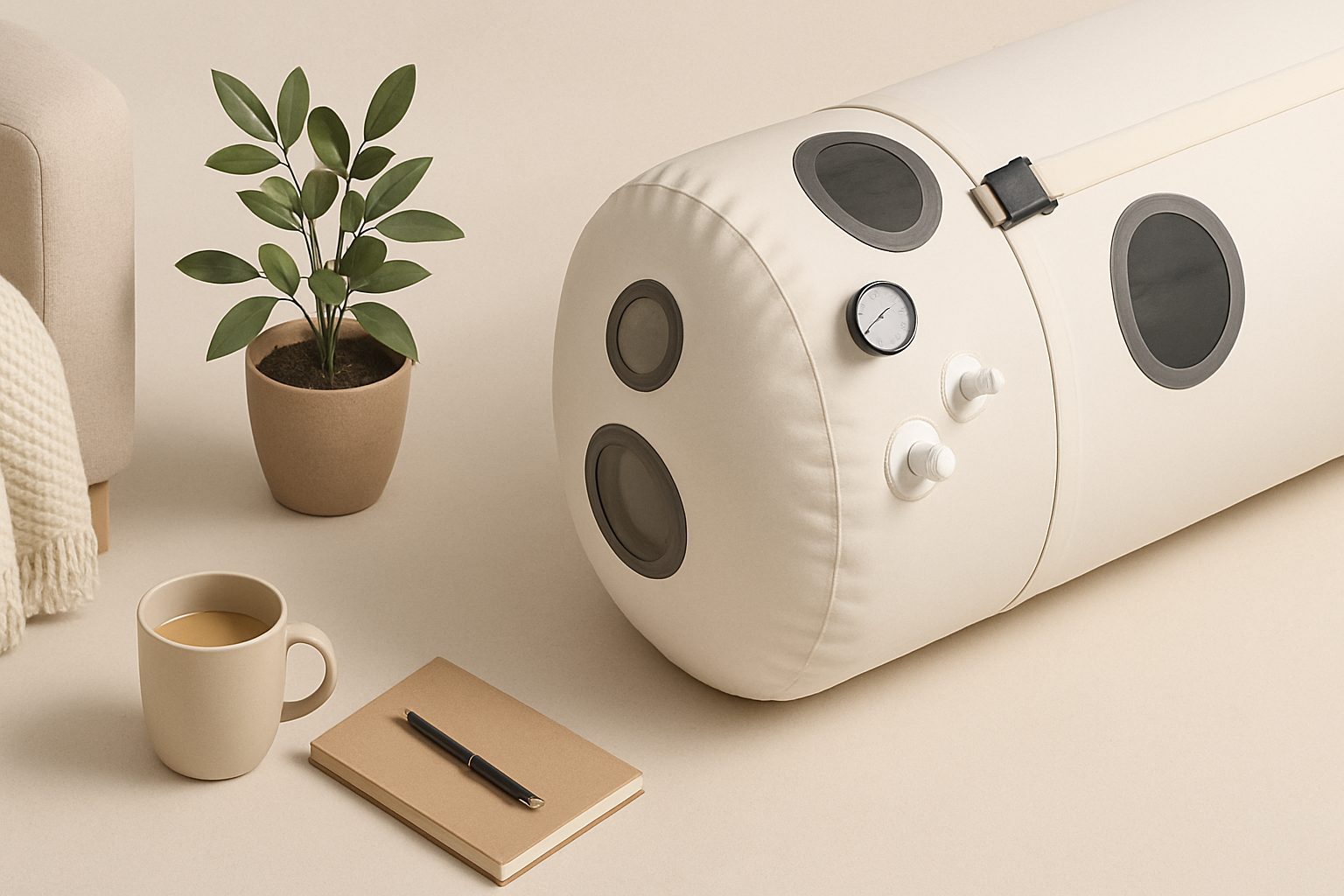
Best 1.3 ATA Mild Hyperbaric Chambers for Home Use UK: Safe, Legal & Effective Picks
Hyperbaric oxygen therapy (HBOT) has moved beyond medical clinics and sports recovery centres — but the home market in the UK is fragmented, and choosing the right chamber comes down to understanding one crucial number: 1.3 ATA. This mild-pressure rating sits at the exact intersection of effectiveness and UK compliance, which is why savvy home users focus here rather than chasing full-pressure setups.
If you're considering home HBOT, here's what you need to know about 1.3 ATA chambers, why they're the practical choice for UK homes, and which options actually deliver.
Why 1.3 ATA is the UK Home-Use Sweet Spot
The UK's Medicines and Healthcare products Regulatory Agency (MHRA) regulates hyperbaric oxygen devices. Full-pressure chambers (2.4 ATA and above) are classified as medical devices requiring strict approval, training, and often clinical supervision. At 1.3 ATA — just 30% above sea-level atmospheric pressure — mild hyperbaric chambers sit in a different regulatory zone, allowing home use without the medical-device designation burden.
This isn't a loophole: 1.3 ATA is empirically sound. Mild HBOT at this pressure still increases arterial oxygen partial pressure and promotes angiogenesis (new blood vessel formation), the mechanisms underpinning therapeutic benefit. The trade-off is gradual results rather than acute intervention — more suited to chronic conditions, recovery optimisation, and wellness use than acute trauma or decompression sickness.
For home users, this practical advantage is enormous. You avoid:
- MHRA registration and ongoing compliance audits
- Requirement for medical staff or formal training protocols
- Expensive installation (full chambers need reinforced rooms)
- Regulatory grey areas around "off-label" use
Who Benefits Most from Home Mild HBOT
A typical home user isn't recovering from acute diving incidents — that's clinical work. Instead, you'll see uptake among:
Post-injury and slow-healing wounds: Athletes and active people using it as part of recovery from sprains, fractures, or surgical rehabilitation. Results typically appear over weeks, not days.
Chronic fatigue and autoimmune conditions: Anecdotal reports are strong, though clinical evidence is still emerging. Users report better energy and reduced inflammation markers.
Lyme disease and persistent post-infection symptoms: This is becoming a significant market segment; many users combine mild HBOT with other recovery protocols over months.
Anti-aging and general wellness: Some users simply use it as a recovery tool alongside training or stress management, though claims here should be approached carefully.
The honest caveat: mild HBOT works, but it's not magic. If you expect dramatic overnight transformation, you'll be disappointed. Realistic users commit to 20–40 sessions spread over 2–3 months before assessing results.
What to Look for in a Home Chamber
Pressure rating: Confirm it's genuine 1.3 ATA (175 kPa). Some sellers stretch claims; ask for specs or third-party testing.
Chamber material and build quality: Soft-shell chambers (fabric + acrylic or vinyl zippers) are compact and affordable but less durable. Hard-shell options (usually aluminium or acrylic) last longer and feel more robust, though they're heavier and pricier.
Oxygen delivery: Most home chambers use ambient air only — your body absorbs oxygen from increased atmospheric pressure. Premium models add oxygen concentrators or oxygen ports, which theoretically boosts dissolved oxygen further, but they add cost, maintenance, and noise.
Access and comfort: You'll spend 60–90 minutes inside. Good interior space, lighting, and a mechanism that lets you adjust chamber pressure yourself (rather than relying on the operator) matters for regular use.
Noise and running costs: Soft chambers tend to be quieter. Power consumption varies; older models or those with concentrators cost more to run. UK electricity costs make this worth checking upfront.
Maintenance and spares: Buy from vendors with track records of supporting UK customers. Zippers fail, acrylic cracks, and you don't want to be chasing obscure replacement parts from overseas.
Current Options for UK Home Users
The market divides roughly into three tiers:
Budget soft chambers (£1,500–£3,500): Basic, portable, no frills. These do work, but durability can be hit-or-miss, and customer support varies widely. Expect vinyl deterioration after 2–3 years of regular use.
Mid-range hard or quality soft chambers (£4,000–£8,000): This is where most serious home users settle. Better construction, reasonable warranty support, and proven reliability. Many include oxygen ports or basic concentrators.
Premium systems (£8,000+): Full hard-shell builds, integrated concentrators, control systems, and robust UK-based support. Overkill for most home users, but appealing if you're running a small practice or treating family members regularly.
Reputable UK distributors include established medical equipment suppliers who've adapted to the home market, plus direct imports from certified manufacturers. Always verify CE marking and ask for references from other UK users.
Realistic Maintenance and Running Costs
A 1.3 ATA chamber isn't a "buy and forget" investment:
- Zippers and seals: These wear and need periodic replacement (£100–400 annually depending on use frequency).
- Electricity: A chamber with no concentrator costs roughly £20–40 monthly at UK rates for regular use (5 sessions per week). Adding a concentrator can double this.
- Filter changes: If you add oxygen concentration, filters need replacing every 2,000–3,000 hours (£150–300 per replacement).
- Storage: Even idle chambers need monthly pressure checks to catch slow leaks.
Total annual running cost (excluding purchase) typically ranges £400–800 for regular home users.
Setting Realistic Expectations
The difference between mild HBOT and full medical HBOT is one of pace and evidence base. Clinical studies supporting 1.3 ATA focus on chronic recovery scenarios measured in months, not the acute results seen in hospital settings at 2.8 ATA or higher.
Success depends heavily on consistency. One session won't change anything. Twenty sessions without attention to sleep, diet, or training stimulus likely won't either. Mild HBOT works best as part of a coherent recovery protocol, not as standalone miracle cure.
For UK home users serious about recovery, injury prevention, or wellness optimisation, a well-chosen 1.3 ATA chamber is a legitimate, legal, and measurable tool. The key is choosing one built for actual durability, understanding what it can realistically deliver, and committing to consistent use over months rather than weeks.
More options
- Portable Hyperbaric Chambers (1.3–1.5 ATA Soft-Shell) (Amazon UK)
- 10-Litre Oxygen Concentrators for Home HBOT (Amazon UK)
- Hyperbaric Chamber Inner Liners & Comfort Accessories (Amazon UK)
- Anti-Static Floor Mats & Hyperbaric Safety Equipment (Amazon UK)
- OxyHealth & Premium Hard-Shell Hyperbaric Systems (UK Distributors via AWIN) (Amazon UK)