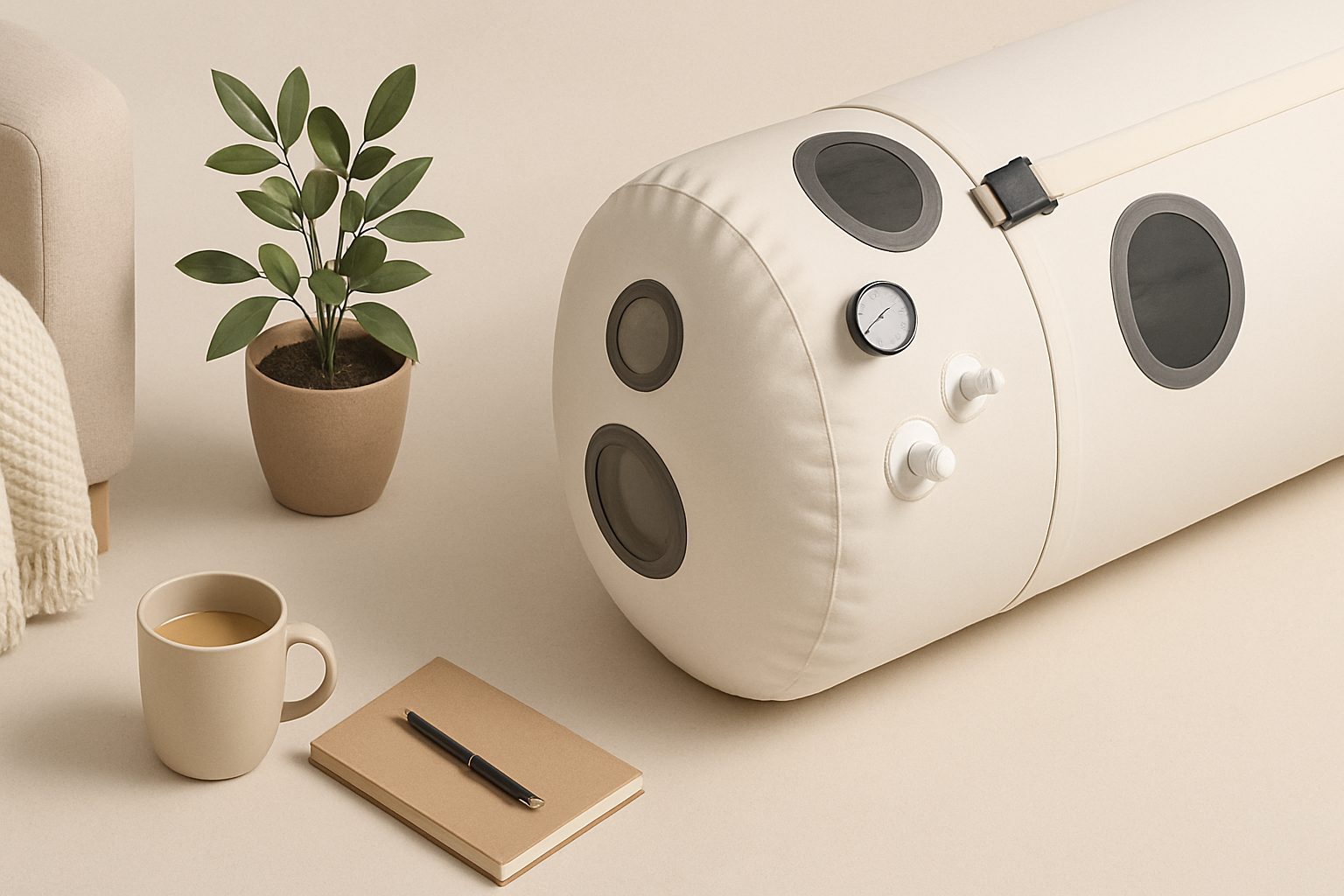
Best Hyperbaric Chambers for Skin Rejuvenation UK: Do They Really Work?
Hyperbaric oxygen therapy has been around for decades, originally developed for treating decompression sickness in divers. But over the last few years, it's become a wellness trend in the beauty space, with claims that sitting inside a pressurised chamber can boost collagen, reduce fine lines, and give you that "radiant glow." The question is whether any of it actually works, and whether a home chamber is worth the investment.
How Hyperbaric Chambers Actually Affect Skin
Hyperbaric oxygen therapy (HBOT) works by delivering oxygen at higher-than-atmospheric pressure. Your body absorbs more oxygen, which increases circulation and theoretically accelerates healing processes. The appeal for beauty comes from one straightforward mechanism: oxygen-rich blood can support collagen production and fibroblast activity—the cells that build skin structure.
The honest version: there's solid evidence that HBOT helps with wound healing and certain medical conditions. Hospitals use it for stubborn ulcers, burns, and post-operative recovery. But cosmetic skin benefits? That's where the science gets murkier. Most studies on HBOT and skin rejuvenation are small or haven't been peer-reviewed rigorously. You'll find anecdotal reports of improved skin texture and firmness, but clinical proof is thin on the ground.
What does have some backing: HBOT can reduce inflammation and increase blood flow, both of which may help acne-prone or irritated skin recover faster. If you already have a wound or active skin condition, there's a legitimate mechanism at play. For pure anti-ageing in healthy skin? It's speculative. You're essentially betting that enhanced oxygen delivery will nudge your skin cells into behaving younger, which isn't the same as proven collagen induction like microneedling or chemical peels deliver.
Pressure Ratings for Cosmetic Use
Home hyperbaric chambers come in different pressure specifications, measured in ATA (atmospheres absolute). This matters because the pressure level affects cost, safety, and results.
1.3–1.5 ATA models are the sweet spot for home use and cosmetic purposes. They're affordable (£2,000–£8,000), safe for unsupervised sessions, and deliver oxygen enrichment without the intensity needed for medical treatment. You won't get the dramatic healing acceleration of a clinical 2.0–3.0 ATA chamber, but you're not paying for medical-grade equipment either. Sessions typically run 60–90 minutes.
Higher pressure models (2.0+ ATA) are more expensive, occasionally require medical supervision in the UK, and carry stricter safety regulations. They're overkill for cosmetic goals and best reserved for people treating specific medical conditions under NHS or private supervision.
For skin rejuvenation specifically, the lower pressure range is sensible: it's enough to increase oxygen saturation without the financial or regulatory burden.
What You Actually Experience
Most users report feeling relaxed during a session—there's something inherently calming about sitting in a sealed capsule breathing enriched air. Some notice their skin looks plumper immediately after (partly dehydration reversal and temporary vasodilation). Whether this persists or translates to long-term improvement varies wildly.
If you have active acne, eczema, or a skin condition involving inflammation, you might see faster healing. If you're chasing fine lines or general radiance in otherwise healthy skin, expect marginal changes at best, and only after regular sessions over weeks. Think of it as a supporting player in a skincare routine, not a replacement for retinoids, sunscreen, or dermatological treatments.
Common selling points to question:
- "Boosts collagen production"—possible but unproven at cosmetic pressures
- "Reverses sun damage"—no evidence it's more effective than prescription retinol
- "Anti-ageing fountain of youth"—marketing language; it's supplemental at best
- "Celebrities use it"—true, but celebrity skincare budgets include dozens of treatments
Practical Considerations for UK Buyers
Cost: A decent home chamber (1.3–1.5 ATA) costs £3,000–£7,000 upfront. Running costs are modest—electricity for the air compressor, occasional filter replacements, and maintenance. Ongoing expenses are roughly £20–£50 per month, assuming regular use.
Space: These chambers are large—typically 2–3 metres long and cylinder-shaped. You need a dedicated room or corner. Not suitable for flats with limited space.
Time commitment: Visible results (if any) require consistent sessions—ideally 3–5 times weekly for 60–90 minutes. That's a serious commitment; many people taper off after a few months.
Safety: Home chambers at lower pressures are generally safe, but you need to follow manufacturer guidelines carefully. No open flames, no electrical equipment inside, proper equalisation techniques. If you have respiratory or pressure-sensitivity issues, consult a GP first.
Alternatives: Before investing, consider whether you'd see better returns from a professional skincare routine (retinol, vitamin C, sunscreen), a course of microneedling, or professional facials. These have stronger evidence behind them.
The Verdict
Hyperbaric chambers can be a legitimate addition to a wellness routine, particularly if you have inflammatory skin conditions or active healing needs. For pure anti-ageing in healthy skin, the results are speculative. You're paying for the possibility of enhanced collagen support, not a guaranteed transformation.
If you're already into wellness gadgets, have the budget, and won't be disappointed by subtle changes, a 1.3–1.5 ATA home chamber is a safer bet than clinical-grade equipment. But if you're hoping for a wrinkle cure, it's worth managing expectations. Consistent skincare, sun protection, and treatments with proven mechanisms will deliver more visible results.
The best hyperbaric chamber for skin rejuvenation is one you'll actually use regularly—and honestly assess whether that fits your lifestyle before investing.
More options
- Portable Hyperbaric Chambers (1.3–1.5 ATA Soft-Shell) (Amazon UK)
- 10-Litre Oxygen Concentrators for Home HBOT (Amazon UK)
- Hyperbaric Chamber Inner Liners & Comfort Accessories (Amazon UK)
- Anti-Static Floor Mats & Hyperbaric Safety Equipment (Amazon UK)
- OxyHealth & Premium Hard-Shell Hyperbaric Systems (UK Distributors via AWIN) (Amazon UK)