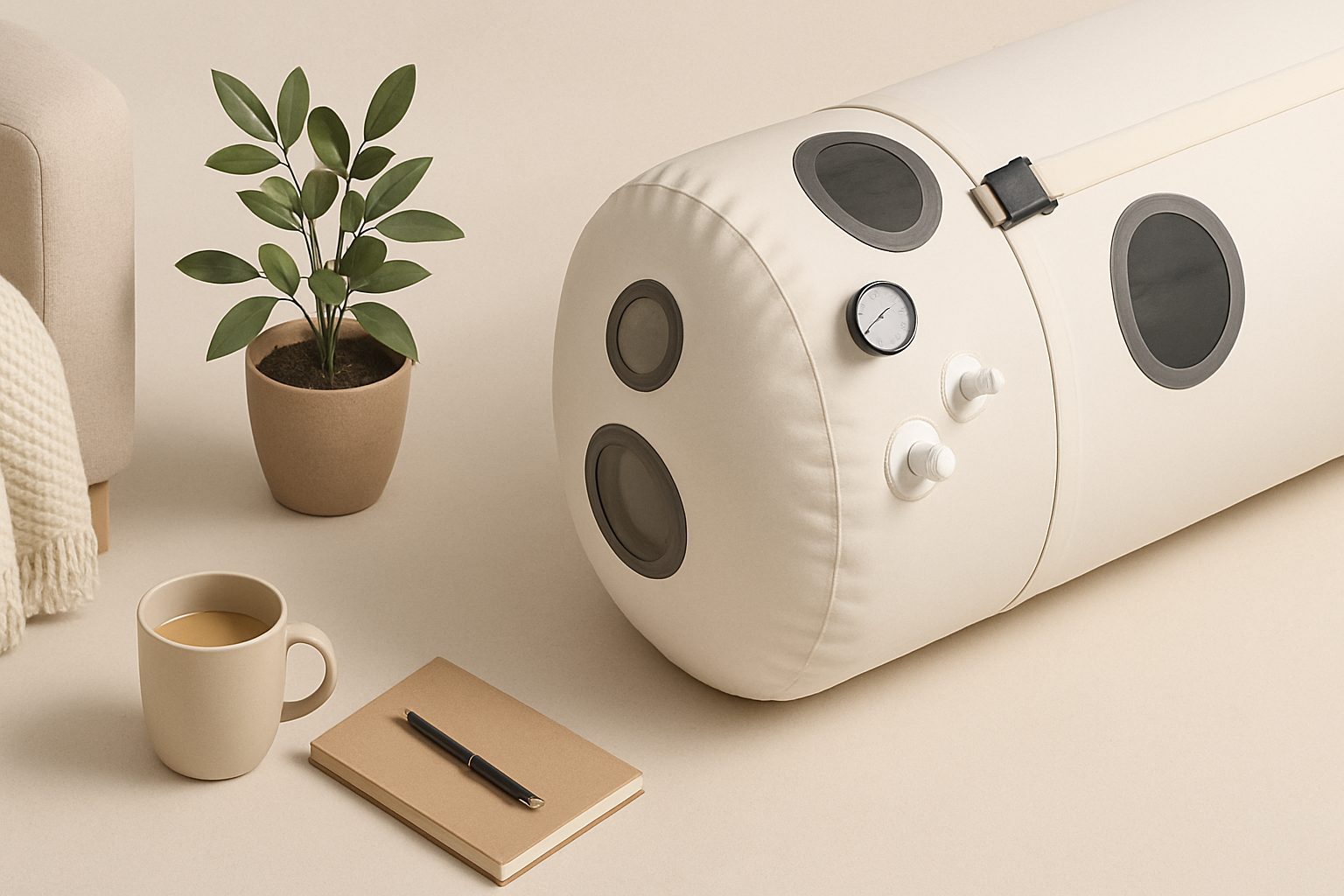
Best Portable Hyperbaric Chambers for Athletes UK (2026): Recovery-Focused Buyer's Guide
Hyperbaric oxygen therapy (HBOT) has become mainstream in sports recovery circles, particularly among endurance athletes and those nursing soft-tissue injuries. Unlike the stationary hard-shell chambers found in clinical settings, portable hyperbaric chambers designed for home use offer athletes the convenience of recovery-focused therapy without clinic visits. If you're considering one, understanding the practical differences between options matters more than marketing claims.
Why Athletes Are Using Hyperbaric Chambers
The theory is straightforward: breathing oxygen at elevated pressure increases oxygen saturation in your blood, which proponents claim accelerates recovery, reduces inflammation, and improves tissue repair. Whether you're recovering from a marathon, managing tendon inflammation, or trying to optimise endurance training adaptations, the appeal is clear. The catch is that results depend heavily on session frequency, pressure levels, and individual response—not all athletes report dramatic differences.
The sweet spot for athletic recovery sits between 1.3 and 1.5 ATA (atmospheres absolute). This range is gentle enough for frequent use without the intensity of medical-grade 2.8 ATA chambers, yet substantial enough to potentially deliver real physiological changes. Most portable chambers marketed to athletes operate in this range, which keeps them accessible and practical for home use.
Portability vs. Reality
"Portable" deserves scrutiny. A chamber weighing 50 kg that requires 30 minutes to inflate and specific electrical setup isn't genuinely portable—it's stationary equipment in your spare room. True portability means you can set it up quickly, deflate it for storage, and potentially transport it. Most home-use chambers fall somewhere between: they're not moving in and out of the back of a van, but they're not bolted to the floor either.
Setup time matters if you're using the chamber regularly. Inflation from flat to operational can range from 10 minutes (soft-shell, basic pump) to 45 minutes (larger chambers, dual-hose systems). For athletes committing to multiple sessions weekly, that adds up. Similarly, the noise levels during pressurisation vary wildly—some chambers are acceptably quiet; others sound like a small compressor running in your living room.
Key Specifications for Athletes
ATA Level: As mentioned, 1.3–1.5 ATA is the athletic sweet spot. Don't assume higher is better; clinical studies on sports recovery cluster around these pressures. Going to 2.0 ATA or higher doesn't proportionally improve recovery and limits how frequently you can safely use the chamber without medical supervision.
Session Duration: Most portable chambers marketed to athletes operate for 60–90 minute sessions. Anything significantly shorter may not deliver meaningful benefit; anything longer risks fatigue and oxygen toxicity concerns without medical oversight.
Power Requirements: Larger portable chambers need proper electrical setup—some require a dedicated 13-amp socket; others run on standard household power. Check your home setup before purchasing. If you're in an older property with limited circuits, a chamber demanding consistent high draw might be problematic.
Material & Durability: Soft-shell nylon chambers are lighter and easier to deflate for storage, but less robust long-term. Hard-shell composite or PVC-reinforced models last longer but are heavier and take up more space. For genuine home use, the difference between five years and ten years of durability is real money.
Oxygen Supply Considerations
Some portable chambers come with an oxygen concentrator; others don't. Running on ambient air (room-air chambers) is cheaper upfront and simpler but delivers smaller pressure gains. Adding an oxygen concentrator increases recovery potential significantly—you're delivering higher oxygen saturation at the same pressure—but adds cost, noise, and maintenance. Oxygen concentrators need regular filter changes and can be expensive to run continuously.
If you're serious about recovery frequency (three-plus sessions weekly), factoring in oxygen concentrator costs is essential. Cheaper concentrators from unknown brands have poor reliability; established medical-equipment brands cost more but don't break down mid-session.
Storage and Space
Deflated soft-shell chambers pack into bags roughly the size of a large suitcase. Hard-shell models take up more room permanently. If you're in a flat or house with limited spare space, knowing where it lives matters—not just practically, but psychologically. Equipment that's inconvenient to access gets used less.
Realistic Expectations
Hyperbaric therapy works best as part of a broader recovery strategy, not a substitute for sleep, nutrition, and training periodisation. Athletes reporting strongest results typically combine chamber use with solid fundamentals. One-off sessions produce minimal benefit; consistent weekly use is what moves the needle.
Equally, don't expect miracles from injury prevention. Recovery-focused chambers can support healing, but they're not a shortcut past actual physiotherapy or medical oversight for serious injuries. The marketing sometimes blurs this line; the reality is more nuanced.
What to Check Before Buying
- Verify certification and pressure-test records. Reputable manufacturers provide these.
- Look for user reviews specifically mentioning durability and customer service, not just performance claims.
- Confirm electricity and space requirements fit your home.
- Check whether spare parts and filters are readily available in the UK—not all international brands offer good local support.
- Ask whether the supplier provides basic training or documentation for operation and maintenance.
The best portable chamber for you depends on your training schedule, available space, budget, and how frequently you can realistically commit to sessions. An expensive hard-shell chamber unused in your garage beats a cheaper soft-shell option you actually use weekly, but only barely. Realistic, consistent use is what drives results.
More options
- Portable Hyperbaric Chambers (1.3–1.5 ATA Soft-Shell) (Amazon UK)
- 10-Litre Oxygen Concentrators for Home HBOT (Amazon UK)
- Hyperbaric Chamber Inner Liners & Comfort Accessories (Amazon UK)
- Anti-Static Floor Mats & Hyperbaric Safety Equipment (Amazon UK)
- OxyHealth & Premium Hard-Shell Hyperbaric Systems (UK Distributors via AWIN) (Amazon UK)