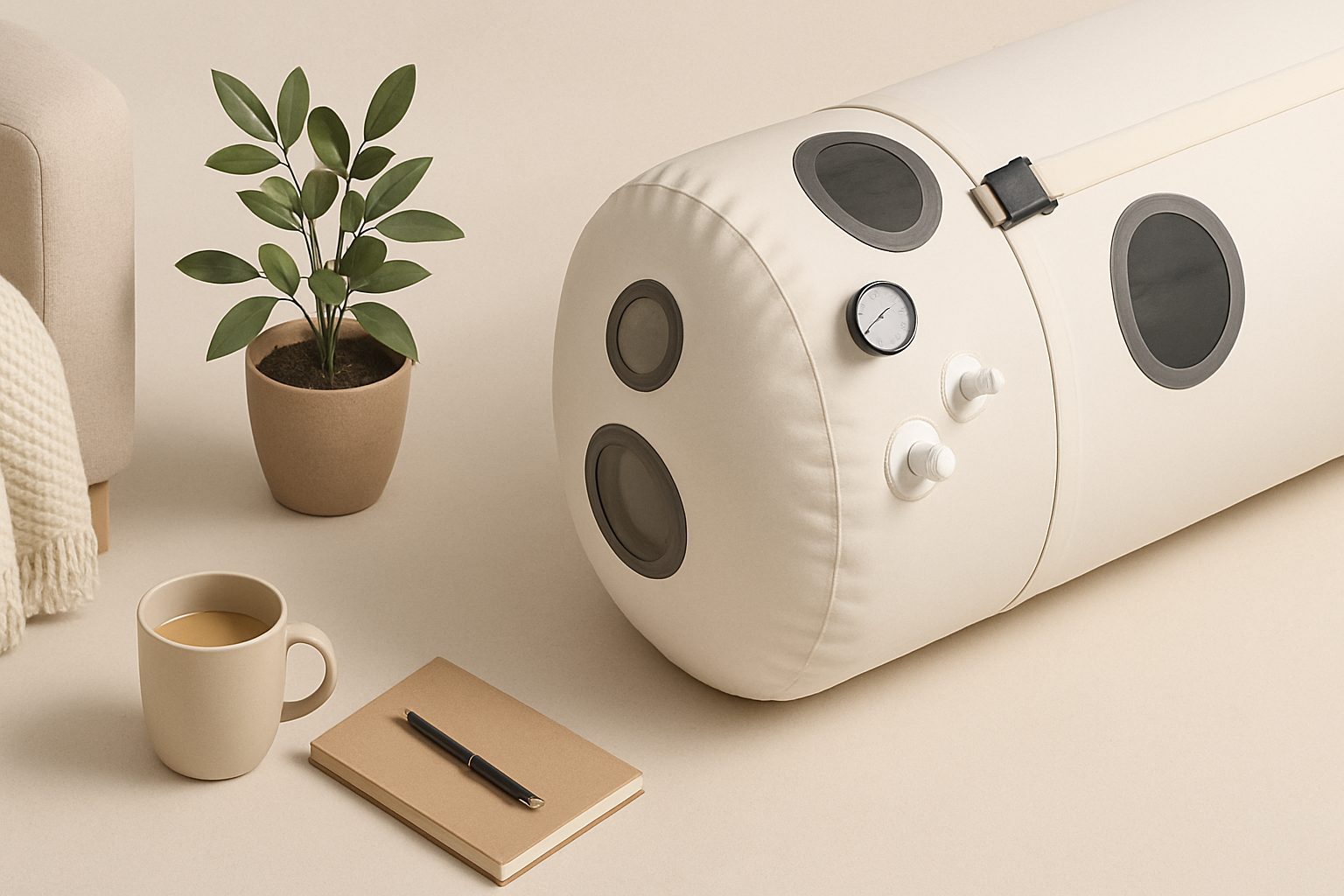
How Long Does a Home Hyperbaric Chamber Session Take? UK Protocol Guide for Beginners
When you're considering a home hyperbaric chamber, session duration is one of the first practical questions you'll need to answer. Most people buying or renting chambers for sports recovery, wellness, or general use in the UK are looking at sessions between 60 and 90 minutes, though the actual time varies depending on your setup, pressure settings, and experience level. Understanding what those minutes actually involve—and why they matter—helps you plan realistic expectations and build a sustainable routine.
Typical Session Length: Why 60–90 Minutes?
The standard session length for home hyperbaric chambers sits comfortably in the 60-to-90-minute window, and there's practical reasoning behind this. A full session includes three distinct phases: pressurisation (ramping up to your target pressure), the plateau (time at pressure), and depressurisation (safely bringing the chamber back to normal atmosphere). Most users find that reaching a therapeutic pressure, spending meaningful time there, and returning safely takes roughly this timeframe.
For beginners, you're likely starting toward the shorter end of that range—perhaps 60 minutes—while more experienced users or those with specific recovery goals might extend sessions closer to 90 minutes. That said, your actual "time at pressure" is what most people focus on, and that's typically 45 to 60 minutes of your total session.
Breaking Down a Typical Session Timeline
Pressurisation phase: This takes between 10 and 20 minutes, depending on your chamber's pump capacity and your target pressure. Most home chambers operate at 1.3 to 1.5 atmospheres absolute (ATA) for general wellness use, and ramping up gradually is safer and more comfortable than rushing. You'll feel the familiar sensation of your ears adjusting—similar to ascending in an aeroplane—which is why many people bring a book or spend this time on their phone.
Plateau phase: Once you reach your target pressure, you'll spend the bulk of your session time here—usually 45 to 60 minutes. This is when the oxygen-rich air does its work. Some people use this time to relax, nap, read, or work (if you're in a larger monoplace or walk-in chamber). Smaller personal chambers are more confining, so mental preparation helps.
Depressurisation phase: Coming back down takes another 10 to 15 minutes, ideally done slowly to allow your body to readjust and avoid discomfort. Rushing this phase isn't worth the slight time saving and can leave you feeling lightheaded or uncomfortable.
Beginner Protocol and Weekly Frequency
If you're new to hyperbaric therapy, most practitioners and chamber manufacturers suggest a ramped protocol rather than jumping straight into long sessions. A typical beginner schedule might look like:
- Week 1–2: Two 60-minute sessions per week, focusing on how your body responds and building comfort inside the chamber.
- Week 3–4: Increase to three sessions per week if you're tolerating sessions well.
- Weeks 5 onwards: Stabilise at two to four sessions per week, depending on your recovery goals and lifestyle.
This graduated approach helps your body adapt and also lets you assess whether the commitment fits your schedule. Many UK users find that two sessions per week becomes sustainable long-term, while others who are serious about athletic recovery push to three or four.
Variables That Affect Your Session Length
Several factors will influence how long your sessions actually take:
Chamber type and pump capacity: A compact monoplace with a modest pump might take 15 minutes to pressurise, whilst a larger walk-in chamber or one with a more powerful compressor might do it in 10 minutes. This directly affects total session time.
Your target pressure: Going to 1.5 ATA takes slightly longer to reach than 1.3 ATA, and some protocols call for higher pressures depending on your goals.
Individual physiology: Some people's ears adjust quickly and painlessly; others need a slower pressurisation curve. You may discover you prefer a gentler ramp, which extends the overall session but improves comfort.
Chamber age and maintenance: A well-maintained chamber with a clean compressor and good seals pressurises more efficiently. Older or poorly serviced units may take longer and consume more energy.
Planning Your Time and Managing Expectations
It's worth being realistic about how this fits into your week. A 90-minute session every other day, plus travel time if you're using a clinic, becomes a significant time commitment. Many people opting for home ownership do so specifically because a 60-minute routine can be squeezed into an otherwise busy day—you're in the chamber, not commuting to a facility.
Budget your session planning as: total session time (60–90 minutes) plus 10 minutes prep (getting settled, equipment check) and 10 minutes post-session (dressing, feeling slightly fatigued if you've had an intense session). That's a realistic 80 to 110 minutes of dedicated time.
The Reality of Consistency Over Duration
One overlooked reality: shorter, consistent sessions beat longer, sporadic ones. Two 60-minute sessions weekly, maintained month after month, will likely deliver more noticeable results than occasional 90-minute marathons. Beginners often find this permission to start smaller helpful—you're building a habit, not proving something.
Start with 60 minutes, twice weekly, and adjust from there based on your comfort, schedule, and how your body responds. That honest baseline gives you room to experiment without overwhelming yourself.
More options
- Portable Hyperbaric Chambers (1.3–1.5 ATA Soft-Shell) (Amazon UK)
- 10-Litre Oxygen Concentrators for Home HBOT (Amazon UK)
- Hyperbaric Chamber Inner Liners & Comfort Accessories (Amazon UK)
- Anti-Static Floor Mats & Hyperbaric Safety Equipment (Amazon UK)
- OxyHealth & Premium Hard-Shell Hyperbaric Systems (UK Distributors via AWIN) (Amazon UK)