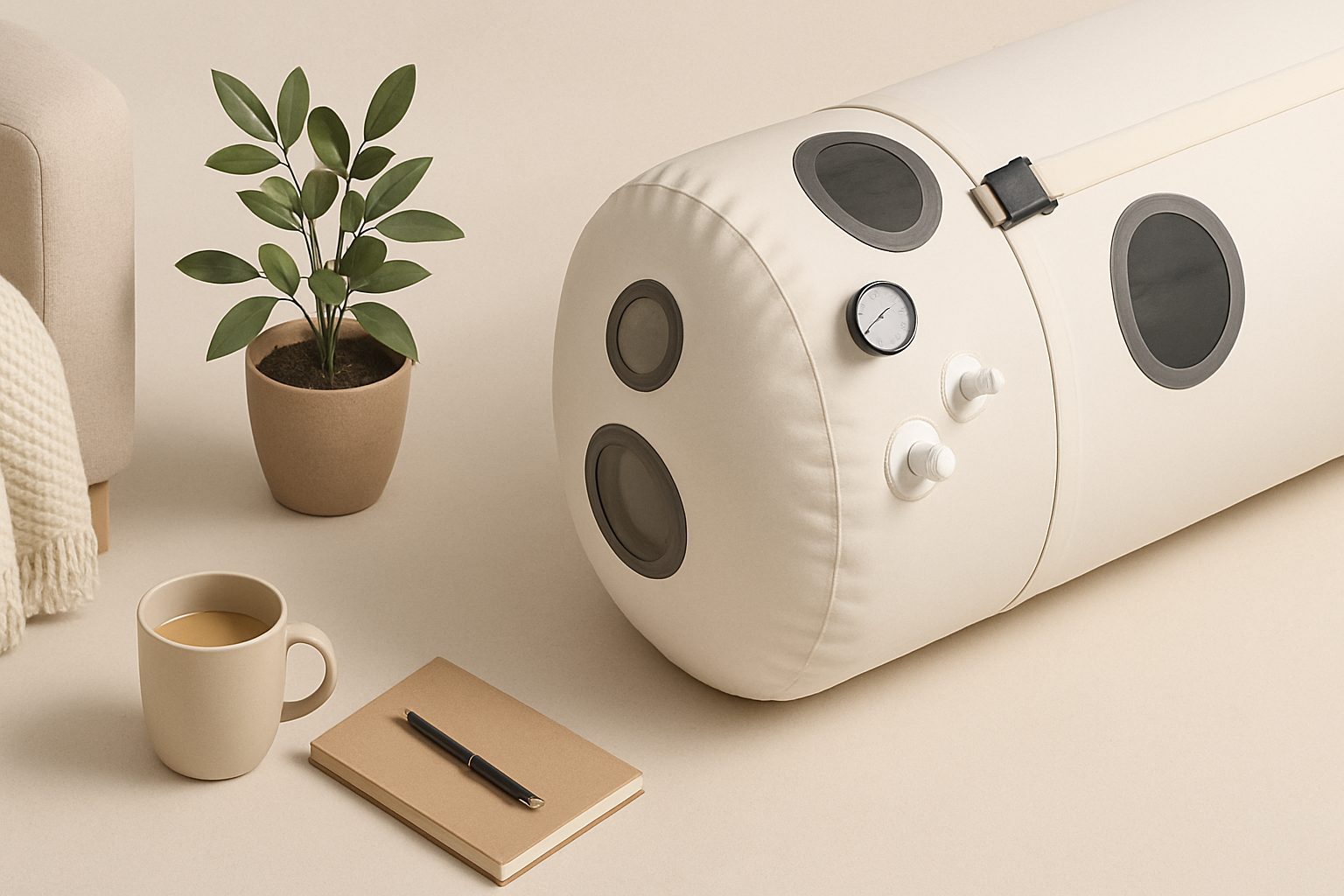
Hyperbaric Chamber Hire vs Buy UK: Which Makes Financial Sense for You?
Whether you're exploring hyperbaric therapy for regular recovery, athletic performance, or managing a chronic condition, one question dominates the decision: should you hire a chamber session-by-session, or invest in your own equipment?
The answer isn't the same for everyone. It depends on how often you'll actually use it, your available space, and your financial capacity to commit upfront. Here's how to work out which option makes sense for you.
The Hire Route: Flexibility Without Commitment
Hyperbaric chamber hire in the UK typically works through specialist clinics and private health centres, particularly in major cities like London, Manchester, and Birmingham. Sessions usually last 60 to 90 minutes and range from £40 to £100 per session, depending on the chamber type and location.
A standard soft-shell chamber (the portable type, less medically intensive) sits at the lower end. Hard-shell chambers—medical-grade equipment used in some private clinics—sit at the higher end, though they're less common for personal use hire.
The appeal of hiring is obvious: no capital outlay, no storage concerns, no maintenance responsibility. You book when you need it, show up, and that's that. This works well if you're trying hyperbaric therapy for the first time, or if your usage is genuinely sporadic—a few sessions per month, or months between sessions.
The catch emerges quickly with frequency. If you're attending twice weekly, hiring becomes expensive fast. At £60 per session (a mid-range estimate), twice weekly costs £480 per month, or £5,760 annually. Add in travel time to the clinic—often 30 minutes to an hour each way in urban areas—and the friction accumulates.
Availability is another real constraint. UK clinics operate set schedules, and if you need morning sessions before work or late evening slots, you're limited by what's available. You can't use a chamber at 11 p.m. on a Tuesday if no clinic offers it.
The Buy Route: Capital Cost Meets Control
A decent home soft-shell hyperbaric chamber costs £3,000 to £10,000 new, depending on the model and specifications. Some used chambers appear on the second-hand market for £1,500 to £4,000, though you need to assess condition and warranty carefully.
Running costs are modest: electricity (roughly £20 to £50 per month, depending on usage frequency and local rates), and occasional maintenance or seal replacement (typically £200 to £500 every few years). You don't need professional servicing for a well-maintained soft chamber—unlike medical-grade hard chambers.
Space is the practical constraint most people underestimate. A soft-shell chamber occupies roughly the footprint of a large wardrobe or small shed—around 1.2m × 1.2m × 2.1m standing height. If you live in a flat without a spare room or garage, it's not viable. If you have the space, it can live in a garage, spare bedroom, or garden room.
Breaking Even: Usage Frequency Matters Most
The breakeven point depends on your session cost and chamber price. Using a typical £5,000 purchase and £60 per session hire cost:
- At one session weekly (52 annually): hire costs £3,120/year. You'd break even on the equipment cost in 1.6 years, then save money indefinitely.
- At two sessions weekly (104 annually): hire costs £6,240/year. Equipment pays for itself in 10 months.
- At three sessions weekly (156 annually): hire costs £9,360/year. Equipment pays for itself in 6.4 months.
- At one session fortnightly (26 annually): hire costs £1,560/year. The equipment doesn't pay for itself for over 3 years.
This calculation assumes you keep the chamber long-term. If you're uncertain about usage beyond 18 months, hiring almost certainly makes more sense financially—and allows you to walk away without a loss.
Real Usage Patterns Rarely Match Predictions
Here's where the maths meets reality. Most people overestimate how often they'll use a home chamber. The motivation fades. Life gets busy. Scheduling isn't automatic like a gym membership, and there's no external commitment nudging you forward.
If you genuinely use a chamber twice weekly for recovery or performance, ownership is a clear financial win. If you're down to once monthly after six weeks, hire would have been cheaper and less cluttered.
Key Decision Factors
Choose hire if:
- You're uncertain whether hyperbaric therapy is right for you
- You're using fewer than one session weekly on average
- You have no suitable storage space at home
- You value flexibility and zero ongoing responsibility
Choose buy if:
- You're committing to at least one session weekly, sustained over 12+ months
- You have storage space (garage, spare room, or garden space)
- You want scheduling flexibility and control
- You're factoring in a 3–5-year ownership horizon
UK Hire Providers: Know Your Options
Most hyperbaric hire in the UK runs through private health clinics rather than dedicated hire companies. Search for "hyperbaric chamber hire [your city]" to find local options. Availability varies regionally—London and major cities have multiple providers; smaller areas may have none within reasonable distance, which tips the scales toward buying if you're serious about regular use.
Some clinics offer packages—discounted rates for block bookings (e.g., ten sessions at a discount)—which can reduce the effective cost per session if you commit upfront.
Which Path Wins?
The financial case for ownership emerges clearly once you commit to regular use. The financial case for hire emerges equally clearly if you're still testing the waters or using sporadic sessions.
The hidden winner is knowing which camp you're actually in. Most people considering home hyperbaric chambers are either genuine repeat users (athletes, people managing chronic conditions) or explorers. Be honest about which you are. If you're genuinely a twice-weekly user, the maths strongly favour buying. If you're exploring, start with hire and gather real data on your usage pattern before making a capital commitment.
More options
- Portable Hyperbaric Chambers (1.3–1.5 ATA Soft-Shell) (Amazon UK)
- 10-Litre Oxygen Concentrators for Home HBOT (Amazon UK)
- Hyperbaric Chamber Inner Liners & Comfort Accessories (Amazon UK)
- Anti-Static Floor Mats & Hyperbaric Safety Equipment (Amazon UK)
- OxyHealth & Premium Hard-Shell Hyperbaric Systems (UK Distributors via AWIN) (Amazon UK)