Hyperbaric Chamber vs Float Tank UK: Which Home Wellness Investment Is Right for You?
If you're looking to invest in a home recovery or wellness device, you've probably come across both hyperbaric chambers and float tanks. They're popular in UK wellness circles, but they work in completely different ways and suit very different needs. Before dropping £5,000–£40,000, it's worth understanding what each actually does and whether it fits your life.
How They Actually Work
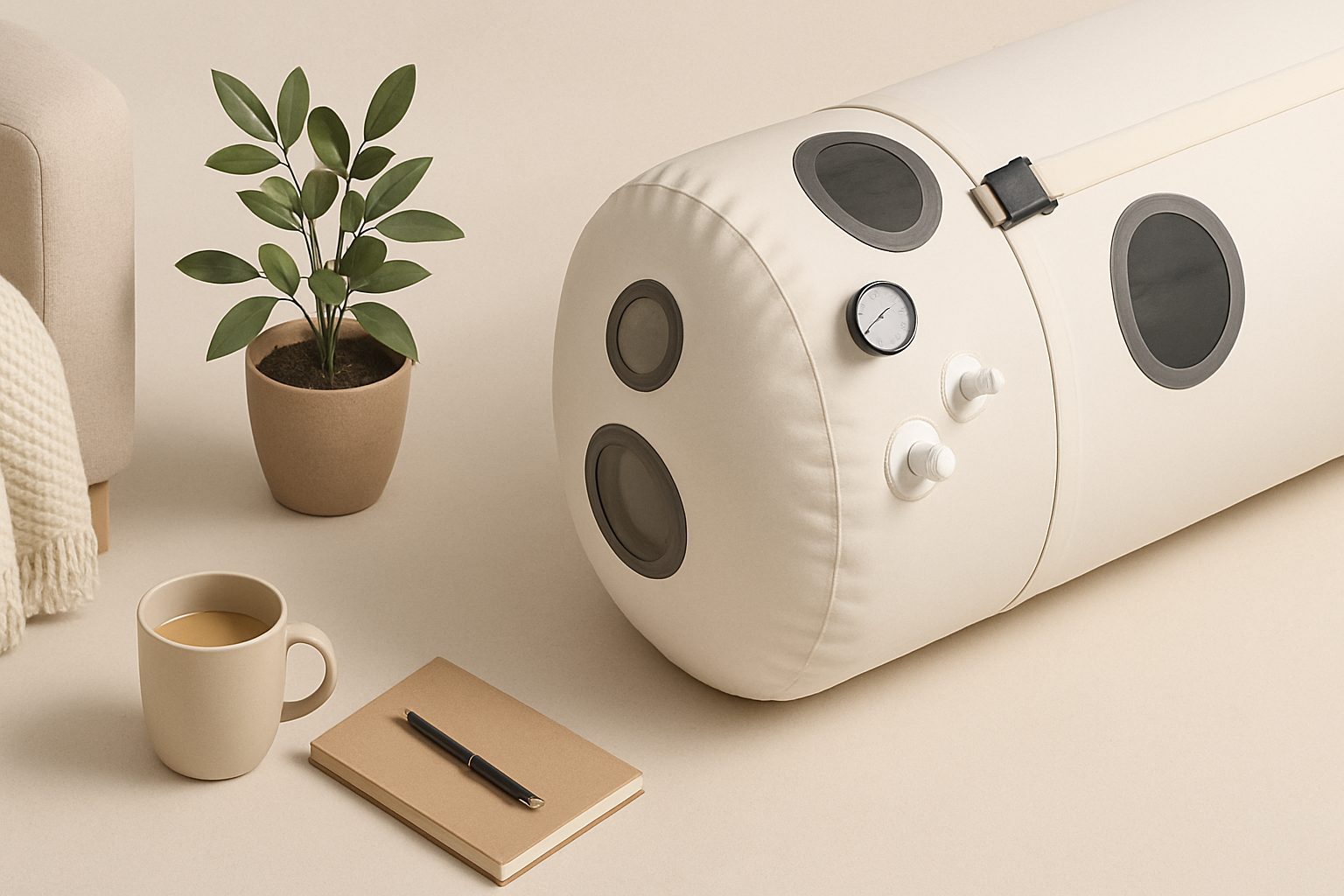
A hyperbaric chamber increases atmospheric pressure inside an enclosed pod whilst you breathe in oxygen or regular air. The idea is that higher pressure forces more oxygen into your bloodstream and tissues. Most home chambers operate at 1.3–1.4 atmospheres — well below clinical chambers used in hospitals, which go to 2.4+ atmospheres and require medical supervision.
A float tank (or sensory deprivation tank) is a soundproofed pod filled with 30cm of water saturated with Epsom salt — roughly 1.2 tonnes of dissolved salt. You float effortlessly and spend time in complete darkness and silence. The mechanism is purely physical and psychological: buoyancy removes pressure on joints, whilst sensory isolation is meant to reduce cortisol and promote parasympathetic activation.
These are fundamentally different tools solving different problems.
Recovery and Athletic Performance
If you're chasing athletic recovery or faster healing from injury, a hyperbaric chamber is the more direct bet. Some evidence (though mixed and mostly from clinical research) suggests increased oxygen availability may support tissue repair, particularly after surgery or for certain types of wound healing. Athletes in sports focusing on rapid recovery cycles have adopted them, though the actual performance gains outside clinical settings remain unclear.
A float tank doesn't directly speed physical recovery. What it does offer is deep relaxation and reduced inflammation markers associated with chronic stress. For someone overtrained or carrying tension, floating might ease recovery better than the chamber because recovery isn't purely physiological — it's also nervous-system dependent.
The honest take: If you have a specific injury healing goal, the chamber has a clearer mechanism. If you're chasing general wellness and stress reduction, floating is more established for that.
Space and Installation
This is where practical constraints matter.
A home hyperbaric chamber is typically a hard-shell cabin pod or soft-shell inflatable sitting in your spare room. Hard-shell models are 1.4m wide, roughly 2.1m long, and need dedicated electrical supply — they're not moving once installed. Soft-shell models take up less space but are less durable. Both require ventilation and clearance around them. You're looking at a bedroom or dedicated space.
A float tank is similar in footprint — usually 2.5m long, 1.3m wide, and 1.5m tall — but it's a contained system. The harder part is weight and plumbing. A full tank with water and salt weighs around 3 tonnes, so your floor needs to handle it. Most people place them in basements, garages, or dedicated rooms on ground floors. Installation typically requires a plumber if you're not DIY-inclined.
If space is tight, neither is ideal, but both are feasible in a detached house or larger flat with accessible ground level.
Running Costs and Maintenance
A hyperbaric chamber has low running costs once installed — electricity to power it during sessions (typically 60 minutes at a time), maybe £1–2 per session. No consumables unless you're using supplemental oxygen from a concentrator (which adds cost).
A float tank is more demanding. You're regularly adjusting salt levels, filtering water between sessions, and occasionally doing full water changes. Tank maintenance runs £300–£800 per year in filters, chemicals, and Epsom salt top-ups. Water heating also costs money — tanks typically stay at 34–35°C. Over time, this compounds.
The advantage: Chambers are genuinely low-maintenance once set up.
Who Actually Benefits
A hyperbaric chamber makes sense if:
- You're recovering from surgery or a legitimate injury
- You're an athlete or very active person targeting faster tissue adaptation
- You have disposable income and won't feel cheated if the benefits are subtle
- You value routine and consistency (the chamber is passive once you're inside)
A float tank makes sense if:
- You're managing stress, anxiety, or chronic tension
- You have poor sleep quality and want parasympathetic support
- You value the sensory experience and find silence restorative (not everyone does)
- You don't mind regular maintenance
- You're willing to float consistently — occasional use is less effective
Cost Comparison
Entry-level home hyperbaric chamber: £5,000–£8,000. Premium models or hard-shell: £15,000–£40,000+.
Entry-level float tank: £6,000–£10,000. Premium models: £12,000–£20,000+.
Both are significant investments. Neither gets cheaper after purchase — you're paying to run and maintain them.
The Practical Decision
Many people compare these as though they're alternatives when they're actually complementary. Someone recovering from an ACL repair might use a chamber during the healing phase, then switch to floating for ongoing stress management. An athlete might use both.
If forced to choose one and budget is tight, ask yourself: am I here for physical recovery or nervous-system reset? The chamber answers the first. The tank answers the second. Neither is a magic device, and both require consistent use to justify the outlay.
More options
- Portable Hyperbaric Chambers (1.3–1.5 ATA Soft-Shell) (Amazon UK)
- 10-Litre Oxygen Concentrators for Home HBOT (Amazon UK)
- Hyperbaric Chamber Inner Liners & Comfort Accessories (Amazon UK)
- Anti-Static Floor Mats & Hyperbaric Safety Equipment (Amazon UK)
- OxyHealth & Premium Hard-Shell Hyperbaric Systems (UK Distributors via AWIN) (Amazon UK)