NHS vs Private Hyperbaric Therapy UK: When Does Buying a Home Chamber Actually Pay Off?
Hyperbaric oxygen therapy in the UK sits at an awkward crossroads. The NHS offers it free, but getting on the waiting list is like hoping for a lottery win. Private clinics are accessible within weeks, but at £150–£250 per session, costs add up fast. Home chambers exist in a grey zone: they're costly upfront, unregulated for medical use, and most aren't available on prescription. So when does buying one actually make financial sense?
How NHS Hyperbaric Therapy Works (and Why Access Is So Limited)
The NHS funds hyperbaric oxygen therapy strictly for approved conditions: decompression sickness (the bends), non-healing leg ulcers, severe burns, carbon monoxide poisoning, and a handful of other acute injuries. Most conditions people self-treat at home—wound healing, sports recovery, general wellness—aren't covered.
The catch: the NHS runs only seven hyperbaric units across England, Scotland, and Wales. The most accessible are at MS Trust centres in London and Manchester, where neurological patients sometimes get referrals. Waiting times routinely stretch to six months or longer, and treatment requires you to travel to the facility multiple times weekly. If you live outside the South East or North West, NHS therapy is practically impossible.
For covered conditions, NHS treatment is free. But that's only if you can get through the door.
Private Clinic Economics: Predictable Costs, No Waiting
Private hyperbaric clinics are scattered across major UK cities—London, Manchester, Birmingham, Bristol—and cost roughly £150–£250 per session depending on the clinic and chamber type (monoplace vs multiplace). Most people undergoing wound care or chronic condition treatment aim for 20–40 sessions, which works out to £3,000–£10,000 total.
The financial advantage: you can usually book within 2–3 weeks. There's no six-month wait. You know the cost upfront, and many clinics offer bundled session discounts (buying 20 sessions in advance can cut costs by 15–20%).
The practical disadvantages are real. Weekly commutes to a clinic are exhausting. You'll lose work time. If you live in Cornwall, rural Scotland, or East Anglia, travel costs and time eat into your treatment's value. Childcare during sessions is an unstated cost for many people. And private doesn't mean regulation—standards vary, and quality control isn't guaranteed.
Home Chambers: The Break-Even Calculation
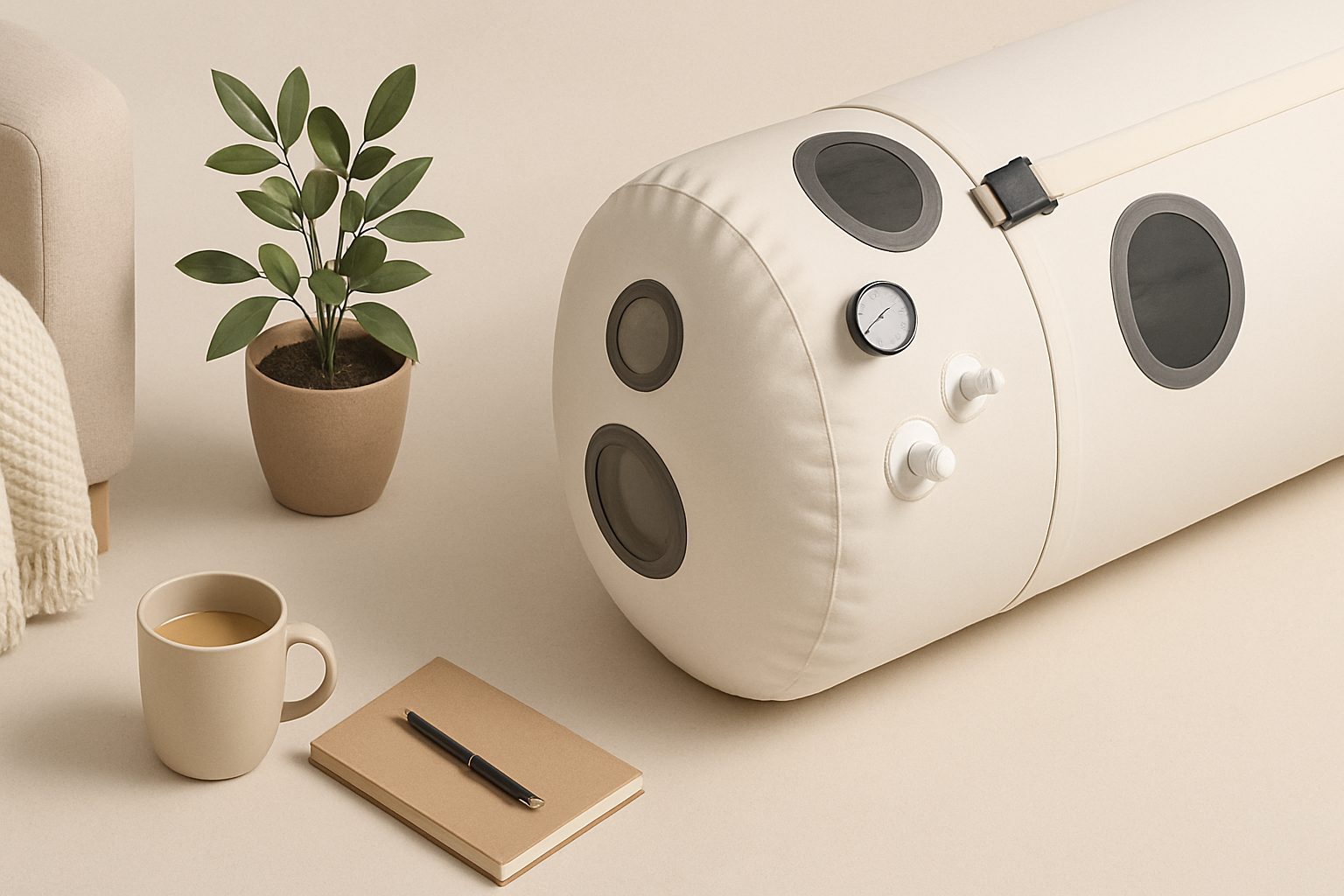
Home hyperbaric chambers range from budget soft chambers at £1,500–£3,000 to professional hard chambers at £15,000–£40,000+. The budget models are marketed directly to consumers and are not clinically approved or CE-marked for medical use in the UK. The expensive models are designed for professional clinics and private medical use.
Here's the maths for soft chambers (the most affordable option):
If you use it 2–3 times weekly for 40 sessions over four months:
- Cost: £2,000–£3,000 (upfront)
- Equivalent clinic cost at £200/session: £8,000
- Net saving: £5,000–£6,000
If you use it once weekly for 20 sessions:
- Cost: £2,000–£3,000 (upfront)
- Equivalent clinic cost: £4,000
- Net saving: £1,000–£2,000
The break-even point is roughly 20 sessions. Buy a chamber, use it frequently, and you recoup your money. But there are heavy asterisks:
- Soft chambers operate at lower pressure (1.3–1.5 ATA) compared to clinical-grade hard chambers (2.0–2.8 ATA). Lower pressure means less clinical efficacy.
- Soft chambers aren't regulated as medical devices in the UK (they're "wellness" products). Your insurer won't cover sessions, and GPs won't refer you.
- Ongoing costs exist: replacement fabric, electricity, maintenance. Budget another £200–£500 annually.
- You're trusting the supplier's safety claims without regulatory oversight.
Hard chambers cost 5–10 times more, so they only make economic sense if you're running a clinic, not treating yourself.
Who Should Buy, Who Shouldn't
Buying makes sense if you:
- Have a chronic condition requiring 40+ sessions over the next year
- Live far from any private clinic (transport savings alone justify the cost)
- Have high-pressure medical insurance that reimburses sessions, making amortization faster
- Can use the chamber with family members or in a small business capacity (e.g., a physiotherapist buying for their clinic)
- Are confident the soft chamber will remain functional for 2+ years
Renting or going private makes sense if you:
- Need fewer than 20 sessions total
- Live within 30 minutes of a private clinic
- Have unpredictable treatment timelines
- Want assured clinical-grade safety and efficacy
- Would feel uncomfortable with an unregulated device at home
The Honesty You Need
Home chamber suppliers market aggressively, often with vague wellness claims and testimonials. Be sceptical. The budget soft chambers work differently from what you'll see in clinical studies. A private clinic may charge you too much, but they're accountable if something goes wrong. A home chamber isn't.
If you have an NHS-eligible condition, pursue that route first—it's free and clinically sound—even if it means waiting. If you're treating something off-label (general recovery, sports injury), understand you're paying for convenience and hope, not proven medical treatment.
The financial maths might stack up for a home chamber, but the clinical maths often doesn't.
More options
- Portable Hyperbaric Chambers (1.3–1.5 ATA Soft-Shell) (Amazon UK)
- 10-Litre Oxygen Concentrators for Home HBOT (Amazon UK)
- Hyperbaric Chamber Inner Liners & Comfort Accessories (Amazon UK)
- Anti-Static Floor Mats & Hyperbaric Safety Equipment (Amazon UK)
- OxyHealth & Premium Hard-Shell Hyperbaric Systems (UK Distributors via AWIN) (Amazon UK)