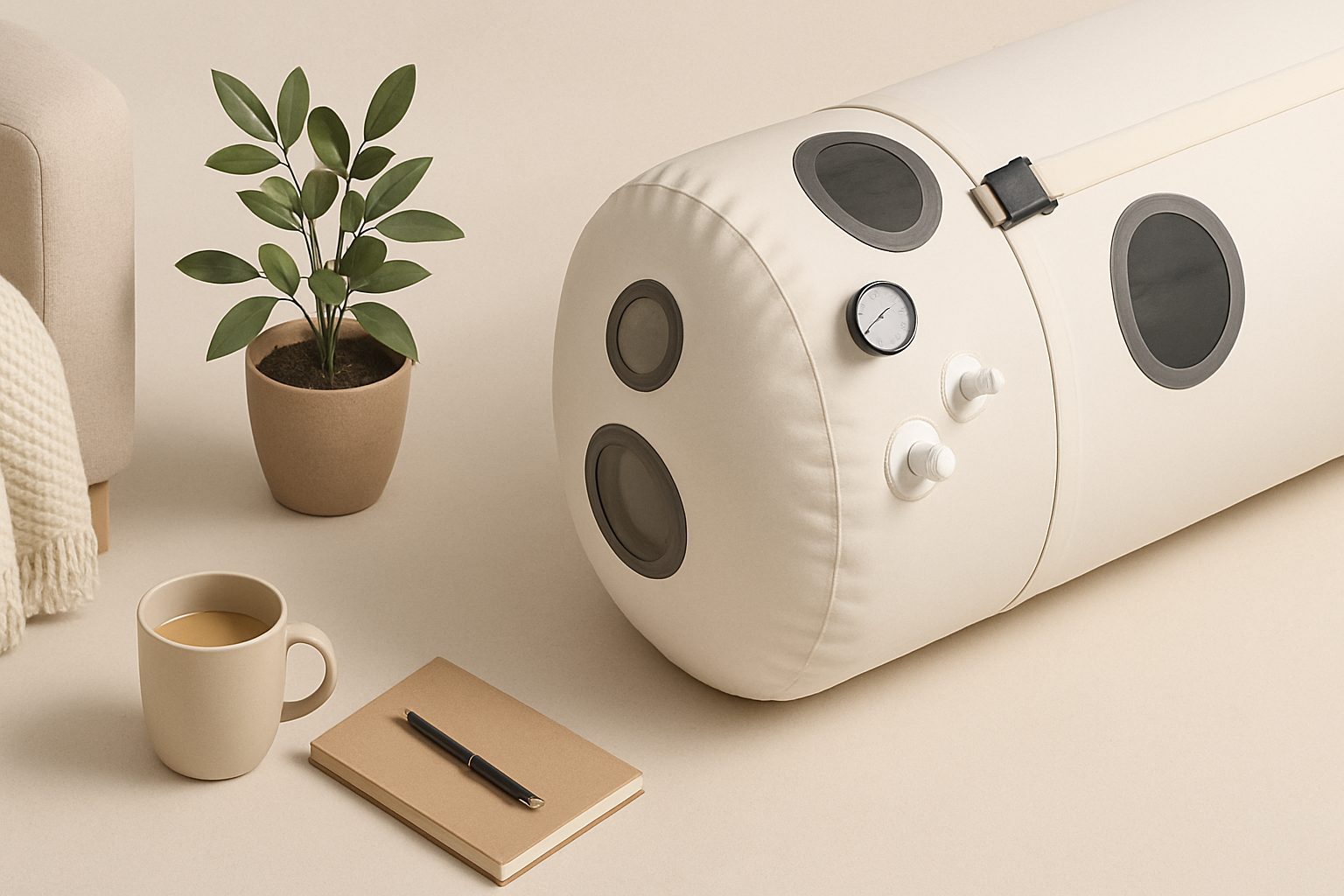
Second-Hand Hyperbaric Chambers UK: 10 Things to Check Before You Buy Used
Buying a hyperbaric chamber second-hand can slash the cost significantly—new residential models run £8,000 to £20,000+, while used units sometimes appear online for half that. But a pressurised chamber that fails mid-treatment isn't just a wasted investment; it's a safety risk. Here's what to check before committing.
1. Verify the Seal Integrity
The acrylic or vinyl shell must maintain an airtight seal at operating pressure (usually 1.3 to 3 atmospheres absolute for home use). Ask the seller for evidence of recent pressure hold tests. Run your own basic check: pressurise to operating pressure and listen for hissing. Check seams, the door gasket, and viewing ports for visible cracks or degradation.
If the acrylic has yellowed significantly or shows stress fractures, replacement costs £2,000–£4,000 depending on the model. Old gaskets may need replacing (£200–£600) but that's a reasonable maintenance cost if everything else checks out.
2. Check the Compressor's Service History
The compressor is the heart of the system. Ask for maintenance records: oil changes, filter replacements, running hours. A compressor that hasn't been serviced in 5+ years may be approaching failure. Run it for 10 minutes and listen for unusual grinding, squealing, or rattling—those are red flags.
Most residential compressors last 5,000–10,000 running hours with proper care. If the seller can't provide service history, budget £1,500–£2,500 for a professional inspection and potential refurbishment.
3. Inspect the Pressure Gauge and Safety Valve
The pressure gauge must be calibrated and accurate. Ask when it was last checked. The safety relief valve is critical—it prevents over-pressurisation, which can rupture the chamber or injure the user. Both should have documented calibration dates within the last two years.
If they don't, factor in £300–£500 for professional recalibration and testing. Don't skip this: an uncalibrated gauge or failed relief valve is genuinely dangerous.
4. Look for the CE Mark and Original Certification
EU-manufactured chambers should carry a CE mark and come with a Declaration of Conformity. This confirms the unit met safety standards at manufacture. Ask the seller to provide documentation; reputable resellers will have it. If they can't produce it, that's concerning—you won't know if the chamber was properly engineered or tested.
UK-spec chambers should comply with BS EN 13318 (medical hyperbaric systems). Chambers without clear certification are harder to insure and may not meet current safety standards.
5. Confirm the Model and Check for Recalls
Search the manufacturer's website for your specific model. Some older designs had seal issues or pressure-regulator failures that led to recalls or design updates. Knowing the model number and manufacturing year helps. If the manufacturer is no longer in business, you lose access to parts and technical support—that's a real problem if something breaks.
6. Test the Control Panel and Monitoring Systems
Modern chambers have digital controls, timers, and pressure readouts. Plug it in (using an electrician's help if you're unsure) and run a dummy cycle to check all buttons respond, the display works, and audible alarms sound. Faulty electronics aren't typically critical safety failures, but repairs can be pricey (£400–£1,200 for a replacement control board).
7. Check for Rust, Corrosion, and Physical Damage
Inspect the outer shell, metal fittings, and frame. Surface rust on the frame is cosmetic and fixable with a wire brush and paint. Heavy rust on the compressor or interior metal parts suggests the chamber has been neglected or stored in damp conditions—that raises questions about internal corrosion you can't see.
Dents or cracks in the acrylic shell are disqualifying unless the seller can prove they've been professionally repaired (most reputable shops can certify this).
8. Ask About Previous Use and Owner History
How many hours has the chamber run? Was it used daily or occasionally? Did the owner follow maintenance schedules? A chamber used 2 hours per week in a climate-controlled home is in better shape than one running 6 hours daily in an unheated garage. If you can speak to the previous owner, that's a good sign—they're willing to stand by the unit.
Chambers sold by commercial clinics (rather than private owners) are often better documented, though sometimes heavily used.
9. Get a Professional Pre-Purchase Inspection
If you're spending £3,000+ on a used chamber, paying £200–£400 for an independent technician to inspect it is wise. They can test pressure hold, check seals, inspect the compressor, and certify it's safe. Many hyperbaric technicians advertise this service; some manufacturers' distributors offer it too.
This step cuts your risk dramatically and gives you documentation for insurance purposes.
10. Understand What Isn't Covered if Things Go Wrong
Second-hand chambers rarely come with warranty. Once you buy it, repairs are your responsibility. Check whether your home insurance covers hyperbaric equipment (most don't automatically—you may need to add it). If the unit fails or causes injury and you can't prove it was properly maintained and tested, you could be liable.
Factor that risk into your offer. A £5,000 used chamber that needs a £2,000 compressor replacement is actually a £7,000 purchase.
The Real Question: Is Buying Used Worth It?
Second-hand can make sense if:
- You've had a professional inspection and found no issues
- The seller has full service records and CE certification
- You're comfortable handling repairs yourself or budgeting for technician visits
- You've verified the model is still supported
It's risky if the chamber is undocumented, the seller is evasive, or you're buying sight-unseen from an online marketplace.
As a safer alternative, entry-level new soft-sided portable chambers (1.3 ATA) cost £2,000–£4,500 on Amazon UK, come with warranty and clear safety certification, and are designed for home use with straightforward maintenance. For the peace of mind and ongoing support, many buyers find the extra £1,500–£2,000 worth it.
More options
- Portable Hyperbaric Chambers (1.3–1.5 ATA Soft-Shell) (Amazon UK)
- 10-Litre Oxygen Concentrators for Home HBOT (Amazon UK)
- Hyperbaric Chamber Inner Liners & Comfort Accessories (Amazon UK)
- Anti-Static Floor Mats & Hyperbaric Safety Equipment (Amazon UK)
- OxyHealth & Premium Hard-Shell Hyperbaric Systems (UK Distributors via AWIN) (Amazon UK)