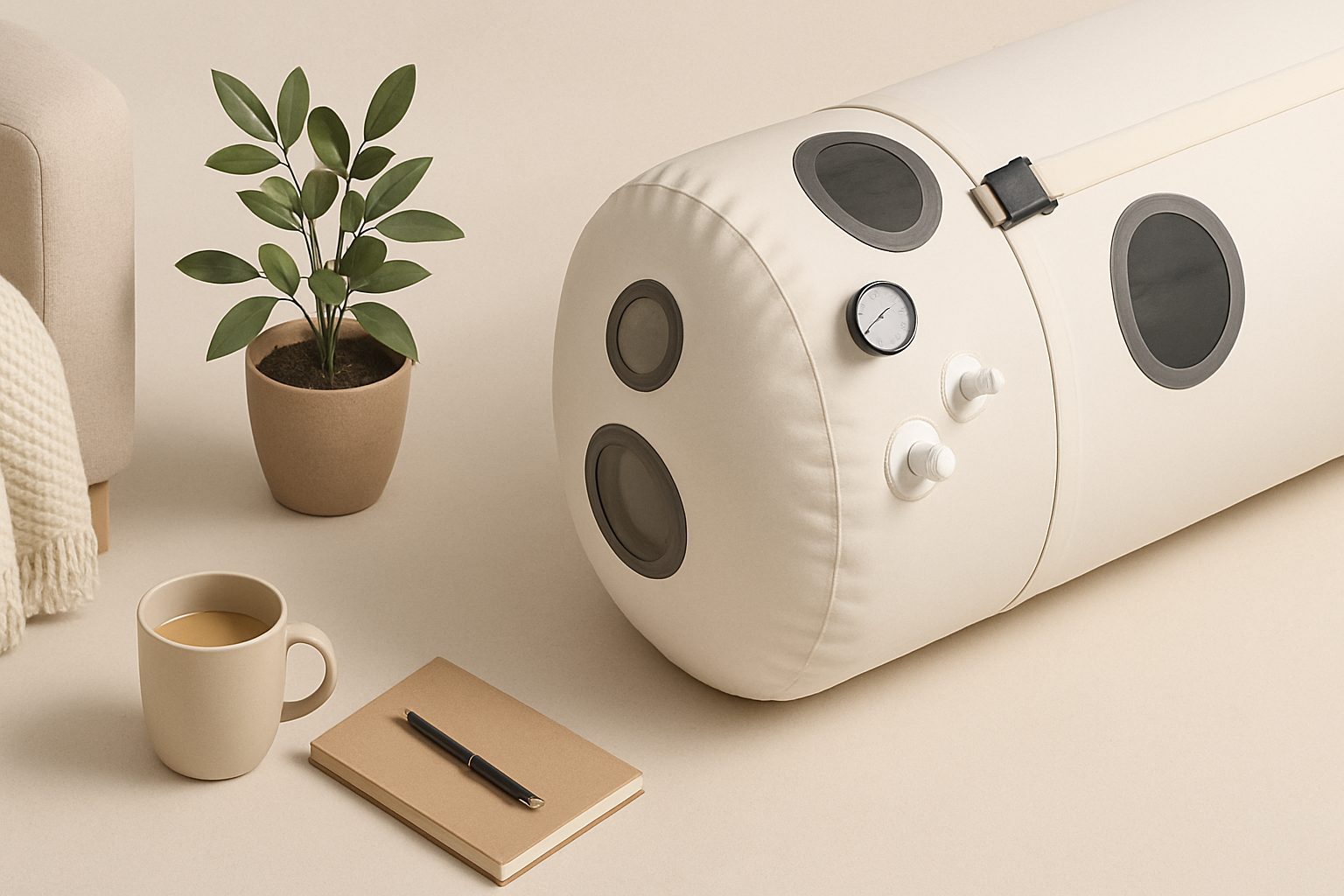
Soft-Shell vs Hard-Shell Hyperbaric Chamber: Which Should You Buy in the UK?
If you're shopping for a home hyperbaric chamber in the UK, you'll quickly notice two distinct types: soft-shell (also called monoplace inflatable) and hard-shell (rigid acrylic or steel) units. The difference isn't cosmetic—it affects price, performance, safety, space requirements, and how you'll actually use the device. This guide walks through what each type does, how they compare in real-world conditions, and which makes sense for your situation.
What's the Difference?
Soft-shell chambers are pressurised fabric bags—usually nylon or vinyl with internal seams. You lie inside a flexible tube, and the chamber inflates around you to create pressure. Typical operating pressure is 1.3 to 1.5 ATA (atmospheres absolute). They're portable, compact when deflated, and significantly cheaper than hard-shell alternatives.
Hard-shell chambers are rigid vessels made from acrylic, aluminium, or steel. You enter through a door and sit or recline inside a solid structure. Hard-shell units operate at higher pressures—often 2.0 to 3.0 ATA—and are built to exacting safety standards. They're stationary and take up dedicated space, but they're designed to last decades.
Cost: The First Major Hurdle
Soft-shell chambers start around £2,000 to £6,000 for a decent home model. They're accessible for people trying hyperbaric therapy for the first time or managing specific conditions at lower pressures.
Hard-shell chambers cost £15,000 to £80,000+ depending on size, materials, and pressure capability. A clinical-grade unit that delivers genuine 2.0 ATA performance sits well above £30,000. This isn't an impulse purchase—it's a long-term investment most people finance or lease rather than buy outright.
If cost is your primary concern, soft-shell is obviously more accessible. If you're committed to regular, higher-pressure therapy, hard-shell makes financial sense over time (lower cost per session, greater longevity).
Space and Installation
Soft-shell chambers pack down. Deflated, they fit in a large cupboard or under a bed. Inflated, they take up roughly 2m × 0.8m of floor space. You can set one up in a bedroom or living room in minutes. No installation required—just a power point for the air pump.
Hard-shell units occupy a room corner permanently. A typical home model needs 2m × 2m, sometimes more. Installation involves checking the floor can support the weight (typically 500kg to 2,000kg) and ensuring proper ventilation. You're committing to dedicated space.
For flats, smaller homes, or people who value flexibility, soft-shell wins. For dedicated therapy rooms or clinics, hard-shell is the practical choice.
Pressure and Therapeutic Range
This is where the difference becomes clinically relevant. Soft-shell chambers at 1.3–1.5 ATA can support certain conditions (recovery after exercise, some sports injuries, general wellness claims) but operate below pressures used in serious clinical hyperbaric oxygen therapy (HBOT), which typically requires 2.0+ ATA.
Hard-shell chambers routinely deliver 2.0–2.8 ATA safely, matching clinical standards. If you're managing a condition that requires higher pressure—acute infections, diabetic wounds, carbon monoxide poisoning aftercare—only a hard-shell unit will reliably deliver it.
That said, not everyone needs clinical-grade pressure. Athletes using chambers for recovery, wellness enthusiasts, or people managing chronic fatigue may find soft-shell sufficient. The distinction is important: soft-shell isn't "a cheaper version of the same thing"—it's a different therapeutic tool.
Safety and Regulation
Both types must comply with pressure equipment regulations, but hard-shell chambers are manufactured under stricter oversight. UK suppliers typically provide CE certification and follow PED (Pressure Equipment Directive) standards. Hard-shell manufacturers are usually established, traceable companies with service networks.
Soft-shell safety hinges on proper maintenance: checking seams, monitoring fabric integrity, ensuring the air pump isn't faulty. A ruptured soft-shell chamber won't explode, but you lose pressure suddenly, which is uncomfortable and defeats the session. Hard-shell units are engineered to fail gracefully—pressure gauges, relief valves, and multi-chamber designs mean redundancy.
For a device you'll use repeatedly over years, this matters.
Noise and User Experience
Soft-shell chambers are quiet. The hum of the air pump is barely noticeable once you're inside.
Hard-shell units—especially older models or those with high-output compressors—can be surprisingly loud. Some produce 75–85 dB of noise, making conversation impossible during sessions. Newer units are quieter, but research the specific model's noise profile if you're sensitive to sound.
Maintenance and Longevity
Soft-shell chambers require regular inspection. Seams degrade over time; fabric can develop micro-tears. With care, expect 5–10 years of reliable use. Replacement seams or a new chamber bag might cost £500–£2,000.
Hard-shell chambers, if maintained properly, operate for 20+ years. Maintenance involves checking door seals, monitoring pressure gauges, and occasional servicing. The investment front-loads, but the cost-per-year drops significantly over a decade.
Which Should You Buy?
Choose a soft-shell chamber if you're new to hyperbaric therapy, have space constraints, want to start affordably, or need a portable option. Use it for general wellness, post-exercise recovery, or conditions where 1.3–1.5 ATA suffices.
Choose a hard-shell chamber if you have a diagnosed condition requiring clinical-grade pressure, plan to use therapy long-term several times weekly, have dedicated space, or want a device that requires minimal maintenance and lasts decades.
Neither type is objectively "better"—they solve different problems. The right choice depends on your condition, budget, space, and commitment level. If you're uncertain whether you'll stick with therapy, soft-shell lets you find out without a five-figure investment. Once you know you'll use it regularly, upgrading to hard-shell becomes a sensible financial decision.
More options
- Portable Hyperbaric Chambers (1.3–1.5 ATA Soft-Shell) (Amazon UK)
- 10-Litre Oxygen Concentrators for Home HBOT (Amazon UK)
- Hyperbaric Chamber Inner Liners & Comfort Accessories (Amazon UK)
- Anti-Static Floor Mats & Hyperbaric Safety Equipment (Amazon UK)
- OxyHealth & Premium Hard-Shell Hyperbaric Systems (UK Distributors via AWIN) (Amazon UK)